


Mai Ram Yoga School – your path to spiritual growth
At the Mai Ram Yoga School, yoga practice is understood not merely as a set of physical exercises but as a complete path of self-improvement. The MRY School in Banská Bystrica is a unique place where anyone can deepen their yoga practice, develop awareness and discover inner harmony. The school is designed so that a person can disconnect from everyday routine, immerse themselves in the process of self-knowledge and deepen their connection with inner peace. It is a place where you can study the philosophy of yoga, practise meditation and experience the effects of yoga in everyday life.
The MRY School in Banská Bystrica is an exceptional place where the traditional wisdom of yoga meets the needs of modern people. This yoga school follows authentic yoga teachings that combine physical practice, breathing techniques, meditation and spiritual teaching.
The MRY School offers yoga for beginners and the advanced alike. It teaches a holistic approach to yoga – as a way of life that helps to reach physical, emotional and spiritual balance.
The MRY School invites everyone who wants to experience authentic yoga teaching.
What Mai Ram Yoga is
Mai Ram Yoga helps to keep health, calm and spiritual balance through asanas, pranayama, meditation and other yogic practices.
Continuing the yogic tradition, Guru Mai Ram integrated the classical teaching of raja yoga and hatha yoga and named it Mai Ram Yoga (MRY). It is a practice meant for a person of today, to cultivate self-knowledge and to work towards the perfection of consciousness.
MRY joins body, mind and spirit. It is a complete yoga practice whose aim is deep inner understanding, a calm mind and spiritual growth.
The method brings six directions of classical yoga into a single practice. It does not pick between them; it builds them one on another, so that movement prepares the breath and the breath prepares the mind.
Kriya
Purification and work with energy.
Jnana
Knowledge and discernment.
Bhakti
Devotion and relationship.
Raja
Mastery of the mind.
Hatha
Body, asanas and breath.
Karma
Action without attachment to its fruit.
Eight principles
The aim of Mai Ram Yoga practice is mastery of the body, steadiness of mind, calm, balance and self-realisation. Every lesson we teach rests on these eight principles. They are not rules to be obeyed, but things that gradually happen.
Meditation dhyāna
Attention grown quiet. Not an empty mind, but a mind that stops running.
Satsang satsaṅga
The company of those seeking the same thing. Practice in a group carries further than practice alone.
Mantra
Sound as an instrument. Repetition that settles both breath and thought.
Self-restraint saṃyama
Measure in food, speech, sleep and action. Without it the rest falls apart.
Asana and vinyasa
Posture and the passage between postures. A body able to sit still.
Pranayama prāṇāyāma
Work with the breath. Breathing is the one bodily function we can both direct and release.
Shatkarma and diet
Six cleansing practices, and what we eat. Practice begins at the table.
Surya and Chandra Namaskara
Salutation to the sun and to the moon. Two rhythms, morning and evening.
Sadhana, the eight stages
Sadhana is spiritual practice. The sadhana of Mai Ram Yoga follows the path of raja yoga, which has eight stages. They come one after another and each rests on the one before it; the aim is mastery of the body, steadiness of mind, calm, balance and self-realisation.
Yama yama
Self-restraint. The ethical ground the practice stands on.
Niyama niyama
Self-cultivation. Inner discipline and spiritual cleansing.
Asana āsana
A steady and comfortable position of the body.
Pranayama prāṇāyāma
Guiding the breath.
Pratyahara pratyāhāra
Drawing the senses back from what presses on them.
Dharana dhāraṇā
Concentration of the mind on a single point.
Dhyana dhyāna
Sustained, one-directional focus of consciousness.
Samadhi samādhi
The highest gathering of consciousness.
The book "Yoga Guide"
Patanjali's Yoga Sutras are a classical, foundational yoga text whose influence has lasted in the yogic tradition to this day. It is perhaps the first attempt to set down the philosophy of yoga in writing, around the 2nd century BCE in ancient India. The text consists of 196 sutras, terse and expressive aphorisms that hold the deepest truths and wisdom of yoga, its most complex ideas and its practical principles.
The sutras give guidance on reaching inner peace and spiritual wisdom, describe the obstacles that may arise on the path of yoga and show how to overcome them. They also discuss the workings of the human psyche and how the mind shapes a person's experience of life. It is a universal teaching whose insights are still relevant to practitioners of many cultures on the path of spiritual growth.
Patanjali's Yoga Sutras were translated from Sanskrit, with commentary, by Guru Mai Ram, spiritual teacher, founder of the Mai Ram Yoga ashram in Vilnius, who carries on the tradition of the natha yogis and has translated and prepared a number of yoga texts and practice guides. Books by Guru Mai Ram
Levels of practice
Asanas are learned in stages. Each stage has its own set of postures and its own time; it cannot be skipped, because the next stage rests on the one before it.
Yoga Open → Basic → Advanced I → Advanced II → Master.
The first lesson is free for newcomers. You need to know nothing and bring nothing, we lend the equipment.
Location and premises of the Mai Ram Yoga School
The Mai Ram Yoga School was founded in 2019 in Banská Bystrica, Slovakia. It has authentic premises where calm and silence reign. The atmosphere of the school always lets a person relax and helps them find a spiritual connection.
We are part of the Mai Ram Yoga Ashram in Vilnius, founded in 2010 by Guru Mai Ram Devi. Our teachers hold their teacher training from there. The ashram also includes the Mai Ram Yoga International Institute in India, an ashram in Varanasi from 2019, a retreat space in Valencia and the Savitri publishing house.
Frequently asked questions
Do I need to book in advance?
Not for regular asana classes. Just come to the one that suits you in the schedule. Booking is needed for online lessons and for courses, such as the beginners' course or the meditation and pranayama courses.
How often should I come?
For beginners we suggest at least twice a week. The body grows stronger step by step, the asanas settle better and the effect of the practice shows sooner. Later you choose the frequency yourself; what matters is regularity.
Can I come without a pass?
Yes. A single lesson can be paid for on its own. A pass is worth it once you plan to come regularly; the prices are in the price list.
Can pregnant women practise?
Yes, there is a lesson made for them and a physiotherapist leads it. It keeps to safety, gentle movement and the way the body changes through pregnancy.
Can I arrange a private lesson?
You can. Write to info@mairamyoga.sk or call +421 949 516 005. We will agree on a time and on what the lesson should hold.
What should I bring?
Comfortable clothes that do not restrict movement. No shoes are needed, we practise barefoot or in socks. We have mats and the other props; bring your own if you prefer.
Practice at the school
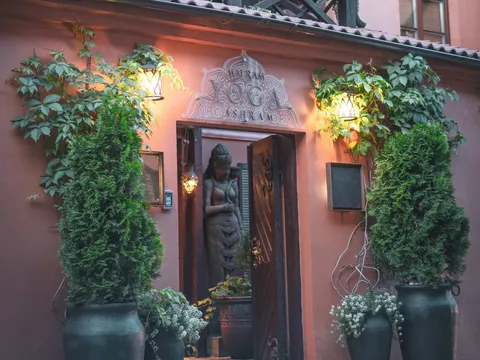
The yoga ashram: a place of yoga teaching
The ashram in Vilnius and Varanasi that our school is part of.
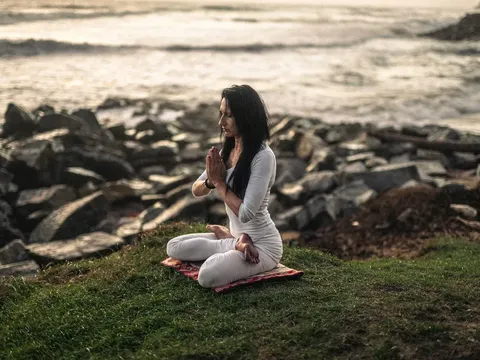
Meditation
Dhyana, the one-pointed focus of consciousness that leads to a quiet mind.
Asana practice
Postures that strengthen the body, calm the mind and prepare for meditation.
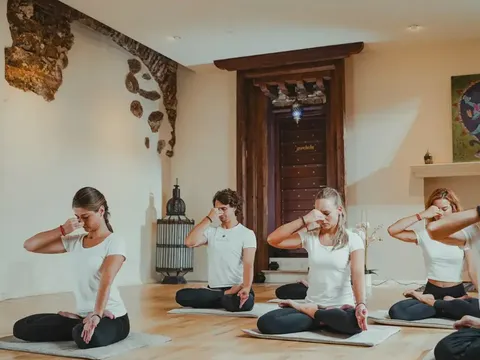
Pranayama
Conscious guidance of the breath that calms the mind and prepares for meditation.
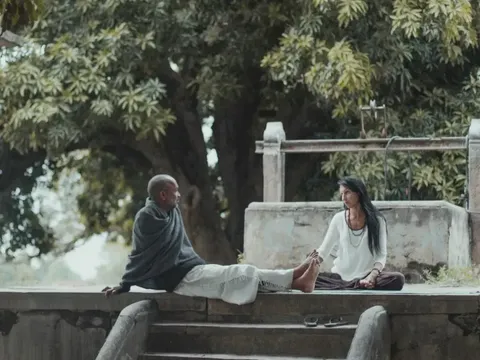
Satsang
Time with the Guru, when yogic teaching passes directly from teacher to student.

Yogic diet
Food as a source of prana and a continuation of spiritual practice.

Chandra Namaskara
Salutation to the moon, an evening practice that settles body and mind.
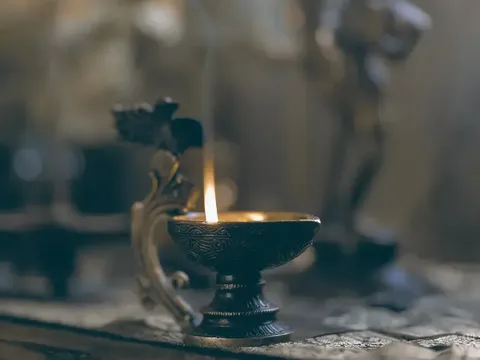
Ashram arati
The offering of fire, a sacred fire ceremony performed in the ashram.
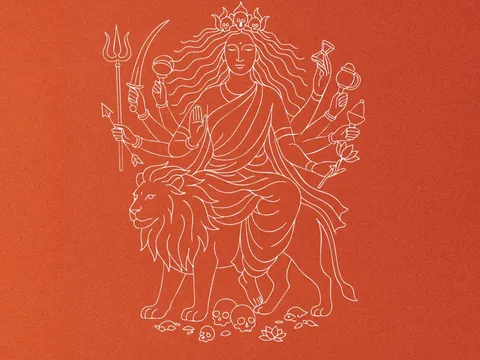
Navaratri practice
Nine nights and days of spiritual practice.
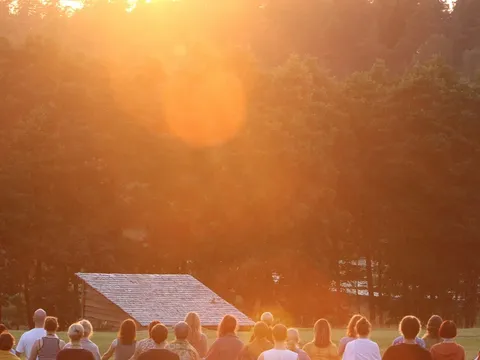
Yoga retreat
Stepping away from the everyday for deeper practice and self-knowledge.