
Meditation practice
Each of us seeks inner peace. But how do we reach it?
One of the most effective ways is meditation practice.
It is a fundamental discipline of yoga, one that fosters spiritual knowledge and growth.
What is meditation practice?
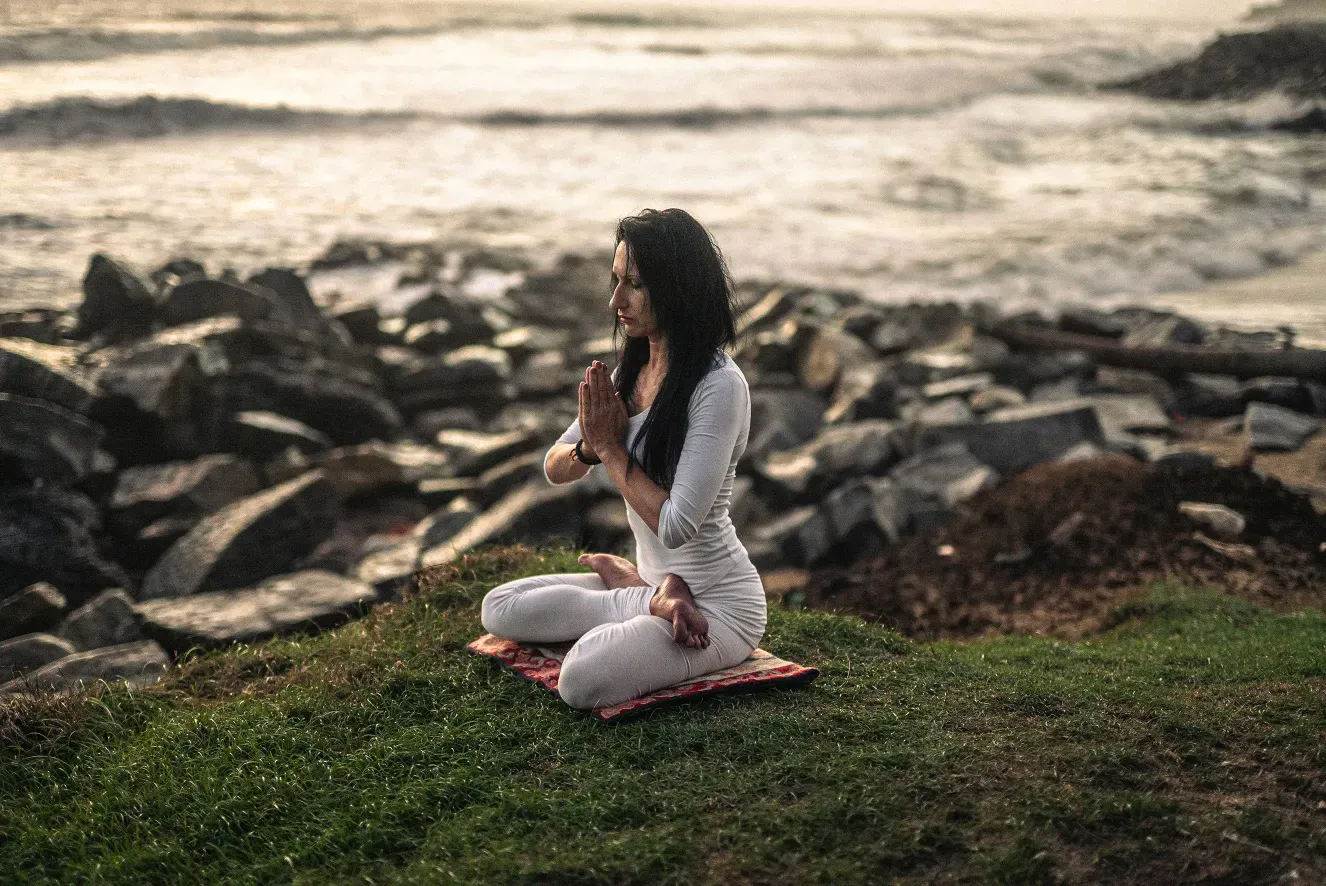
In the yogic tradition, meditation is a practice meant to calm the mind, focus attention and reach inner peace and awareness. Meditation practice helps to keep an inner balance and deepens the understanding of what supports spiritual growth.
Meditation, also called dhyana (dhyāna), is one of the higher stages of yoga: in it, focused consciousness flows one-pointedly and without interruption towards a single sacred object. This sets it apart from concentration, called dharana (dhāraṇā), in which the mind may still wander. The aim of meditation is therefore a one-pointed focus of consciousness, which is essential for reaching a higher level of awareness, inner liberation and final union with the spiritual essence.
In the yogic tradition, meditation is the main means that helps a yogi reach self-knowledge, cleanse consciousness of ignorance and other impurities, and still the mind. Meditation practice leads to the highest state of consciousness, in which the mind reaches inner peace and silence. This state is needed for the goal of yoga to be reached – merging with the Self.
The benefits of meditation practice in yoga teaching
By practising meditation, a person develops the ability to focus attention and to hold it for a long time. This lets the mind settle and relax, improves the handling of emotions by reducing how often and how strongly negative reactions arise, and cultivates self-observation and deeper self-knowledge. Meditation practice is an essential part of yoga teaching, directed towards a person’s spiritual growth.
Meditation practice at the ashram in Vilnius
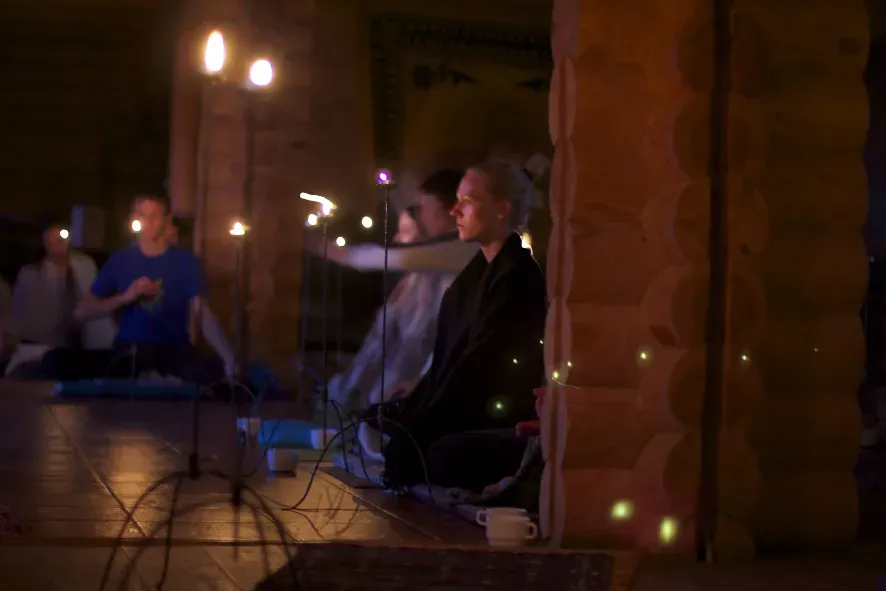
To free oneself from the stream of thoughts and to reach a peaceful mind, inner harmony and spiritual growth, the following meditation practices of the yogic tradition are practised at the ashram in Vilnius:
- mantra meditation (japa, japa),
- svarupa darshana (svarūpa darśana) – meditation on one’s true nature,
- jyotir dharana (jyotir dhāraṇā) – meditation on the Divine light,
- Kriya I meditation,
- Kriya II meditation.
Kriya I
Kriya I meditation consists of the Nada Sanchalana meditation kriya and the Ajapa Gayatri Sanchalana meditation kriya.
Kriya II
Kriya II meditation consists of the Mula Sanchalana meditation kriya, the Prana Sanchalana meditation kriya, the Agni Ram Sanchalana meditation kriya and the Bija Mantra Sanchalana meditation kriya.
Kriya I and Kriya II meditation may only be practised after completing the course “Introduction to Mai Ram Yoga Kriya meditation practice”, which is held at the ashram in Vilnius twice a year, in autumn and in spring. For exact dates, you can ask us through the contact page.
The course “Introduction to Mai Ram Yoga Kriya meditation practice” consists of two levels and an initiation:
- the first level of meditation, “Introduction to Mai Ram Yoga Kriya I meditation practice”, course length: 3 hours,
- the second level of meditation, “Introduction to Mai Ram Yoga Kriya II meditation practice”, course length: 3 hours.
The whole course takes 6 hours.
The tradition of meditation practice and its roots
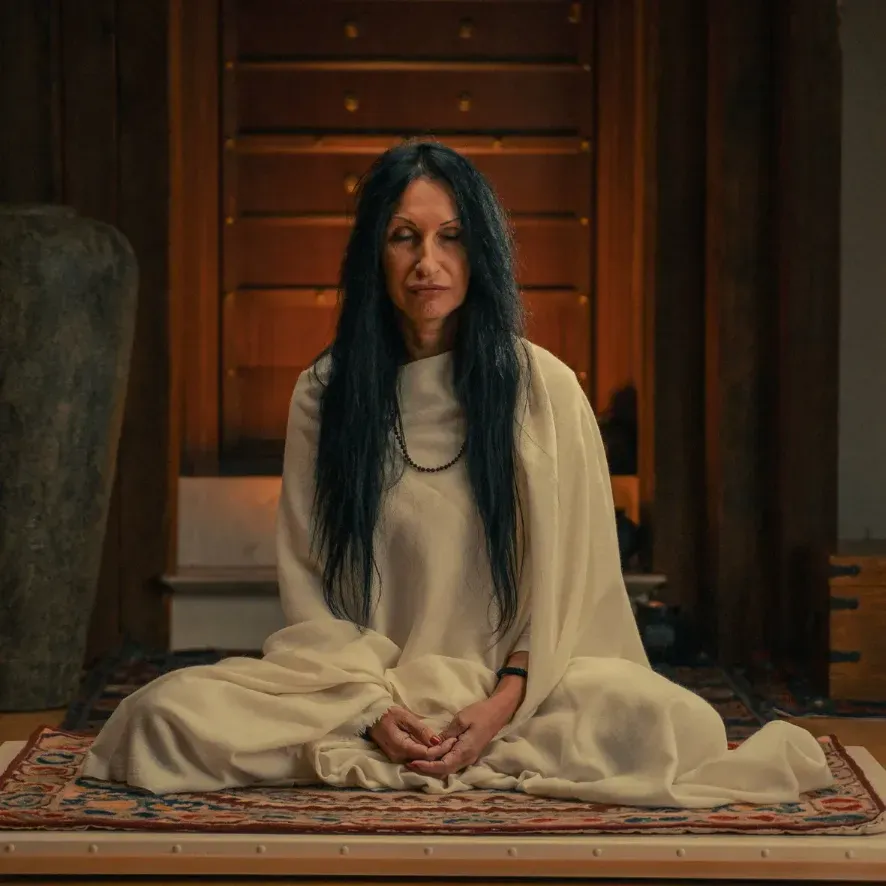
Mai Ram Yoga meditation practices are deeply rooted in the spiritual practices of ancient Indian yoga and tantra. The masters of the natha lineage did not only spread the knowledge of yoga; they also stressed the importance of transmission from Guru to disciple (guru-shishya, guru-śiṣya) in spiritual experience. Mai Ram Yoga meditation techniques teach the conscious guiding of energy, the harmonising of a person’s psychophysiological processes and the transcendence of the mind. As a successor of the natha tradition, Guru Mai Ram adapted the authentic teaching to the person of today while keeping its essence. The yogic tradition stresses not only the techniques of practice but also a conscious way of living, which leads to self-knowledge, self-realisation and inner harmony. This is why Mai Ram Yoga meditation (dharana, dhyana) is not only a calming of the mind but also a deep transformative practice that allows one to understand one’s own true nature.