


Ashram arati: a ritual in praise of the goddess Jagadamba
Have you ever taken part in the sacred offering of fire called arati?
It is a deep spiritual practice that helps to make a connection with the deity, to calm the mind and to feel spiritual peace. Arati is not only a ritual of offering fire but also a prayer of the heart, performed with a pure intention and with devotion.
At the Mai Ram Yoga ashram, the arati handed down by the tradition is performed: a sacred offering of fire that praises the Mother of the Universe, Jagadamba, who cares for all of creation.
What is ashram arati?
Ashram arati (Ashram Aarti) is a spiritual practice that helps a person to make a connection with the deity, to experience spiritual peace and to strengthen devotion. The practice of arati matters because it preserves the tradition and the spiritual wisdom handed down through the ages. At the Mai Ram Yoga ashram, the fire ritual of arati is performed as handed down by the sampradaya (Sanskrit sampradāya – a lineage of teaching) of the nathas, and during it a particular form of the deity is worshipped. Ashram arati (Sanskrit āratī) is the daily practice of the ashram in which the divine, the deity and the spiritual Teacher are worshipped.
The practice of arati at the Mai Ram Yoga ashram
The fire offering ritual performed at the Mai Ram Yoga ashram maintains balance and is an important part of the spiritual energy and of the shared spiritual practice. Ashram arati fosters spiritual unity among the participants and helps them to remember their dedication to the divine and to the spiritual goal of yoga. Although the Guru is especially important in the ashram, the ritual may also be performed by other initiated and appointed students of the Guru, who are called aratikars. It is they who may pass on the offering of the light of fire to the deity. The Guru may leave the ashram for other schools or ashrams to spread the teaching in other places. That is why the practice of ashram arati must not be interrupted when the Guru is away: the Guru’s students continue it according to the teaching the Guru handed down, and so maintain the spiritual energy. The essence of the ritual is to worship the divine, which does not depend on the presence of one person alone, and so the Guru appoints students who are responsible for continuing the ritual, ensuring that the spiritual discipline of the ashram is preserved. In this way the connection with the deity is kept and its blessing is received.
The course and rules of the arati ritual
Arati is performed according to particular rules of the fire ritual. The course of arati:
Ashram arati is a regular daily morning and evening practice of the ashram.
Preparing the altar
For this ritual the ashram has a special altar place with images of the Guru and of the deities.
Offering the fire
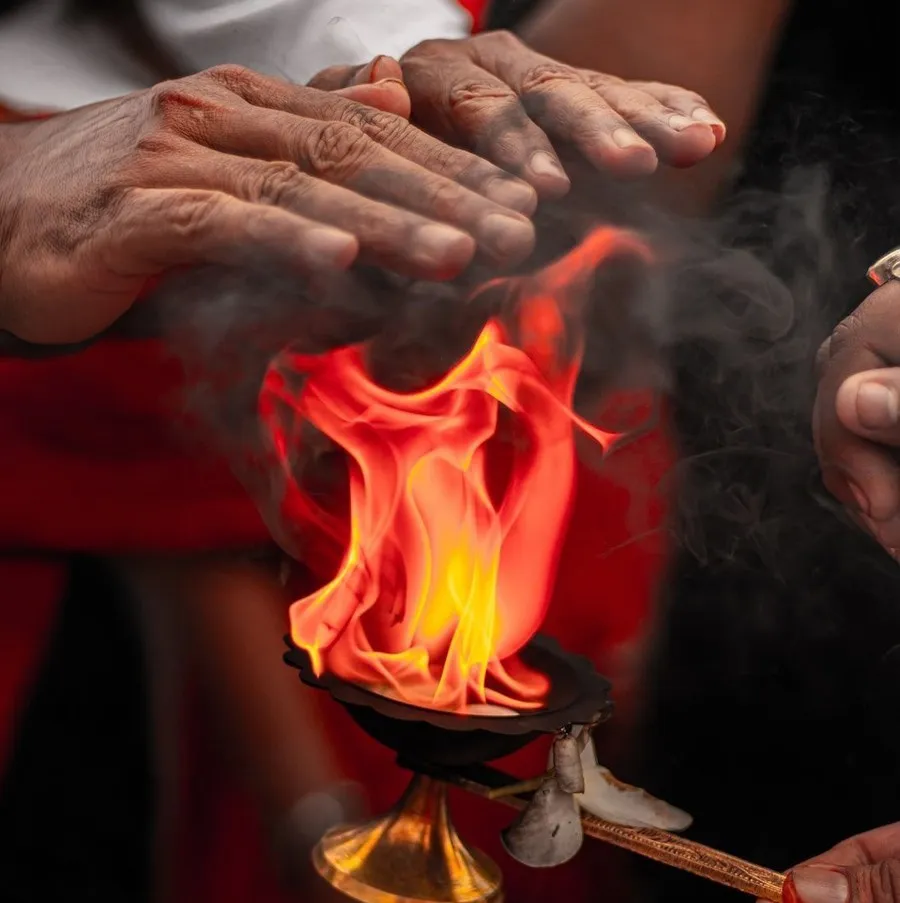
The light of the fire symbolises the bringing of spiritual wisdom and the dispelling of ignorance. Touching the light of the flame symbolises receiving spiritual bliss and protection, and it is also the victory of divine light over ignorance, fear, ego and suffering.
Singing the chants
During arati sacred chants are sung, which create a sacred atmosphere.
Sharing prasad
At the end of arati prasad is shared, that is, food that is first offered to the deity and then, once the deity has touched it, shared among the people. Prasad is divine grace and God’s gift to people.
Bells and small bells during arati spread a sacred vibration symbolising the primordial sound of the universe, OM, which creates a divine atmosphere, removes bad energy and helps to focus the mind on worship.
During arati all five elements (pañcabhūta) are offered: fire, water, earth (flowers), air (incense) and ether (sound).
The offering of fire shows a person’s humility, respect and connection with the deity; with this ritual the deity is thanked for the grace and protection it has given. Certain offerings are given to the deity, and when the deity accepts them, it transforms them into blessings, and this energy returns to the person who made the offering.
Fire purifies and sanctifies. It burns away “impurities” and helps to regain spiritual purity. The arati flame, sanctified by the nearness of the deity, is regarded as a sacred fire, and so its warmth and light purify a person when they receive it with their hands to their face. During arati, fire is understood as the bearer of divine energy.

The symbolism and importance of arati
Arati is a sacred fire ritual in which the light of fire is used as a sign of spiritual light, dedication and devotion. The practice of ashram arati removes spiritual darkness and allows a person to express love for the deity. This practice also helps to calm the thoughts, to focus the mind on the divine and to deepen the practice of ishvarapranidhana (īśvarapraṇidhāna). Ashram arati is an important part of spiritual practice, whose aim is to create a connection with the deity and with the sacred. This practice cultivates spiritual awareness and faithfulness to the Supreme, and teaches us to express respect, gratitude and devotion to Him. The vibration of light, the sound of the bells and the vibrations of the chanted mantras create a sacred atmosphere in the ashram in which the divine energy of Shakti is activated. When the flame is brought to the people during arati, they receive the grace of the deity by touching the fire. In this way the divine energy passes to the community.
Jagadamba – the goddess we worship
Ashram arati is performed in praise of the Mother of the Universe, Jagadamba, the protector of all creation. The goddess Jagadamba is one of the names of Durga (Shakti). She is the motherly power of Durga, which protects, guards and nourishes the whole world. She gives life to all of creation, sustains it and protects it. Her power is not only physical protection but also spiritual guidance. The arati chant also praises another name of the goddess Durga, Shailasuta, the daughter of the mountains, Shiva’s wife Parvati, who embodies love, strength, devotion and spiritual greatness.
The symbolism of fire in the arati ritual
In the yogic tradition, the worship of fire is the most important part of ritual practice. Through fire, offerings reach the gods. Fire is the mediator between people and the deities. Fire symbolises the connection with the heavenly sphere and the cosmic order. Fire is also revered as a purifying and blessing power that protects from evil and sustains life. The ashram arati ritual is a daily practice of worship in which the light of fire is offered to the deity and to the holy Guru. Offering the light of fire to the deity is a respectful act of greeting and reverence. It illuminates the deity and invites it to bless with its presence those who take part in the arati. Arati is performed at dawn and at sunset. The participants touch the sacred fire with their palms and then touch their face, forehead and eyes, receiving the blessing the fire carries. In this way fire becomes the mediator of the deity’s grace. Through it people receive spiritual blessing and purification.
At our school in Banská Bystrica, arati has its place in the schedule after the evening classes, on Tuesday morning before the morning class and on Sunday morning at 7:45, and it lasts 15 minutes.