
Pranayama – a path to balance and peace
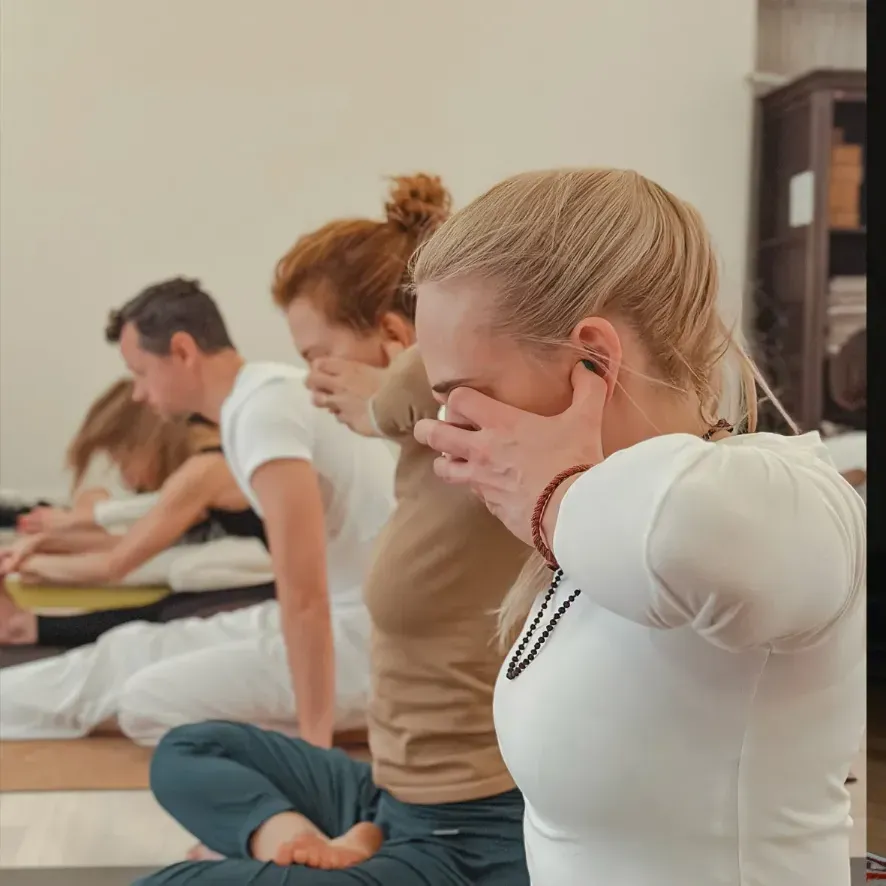
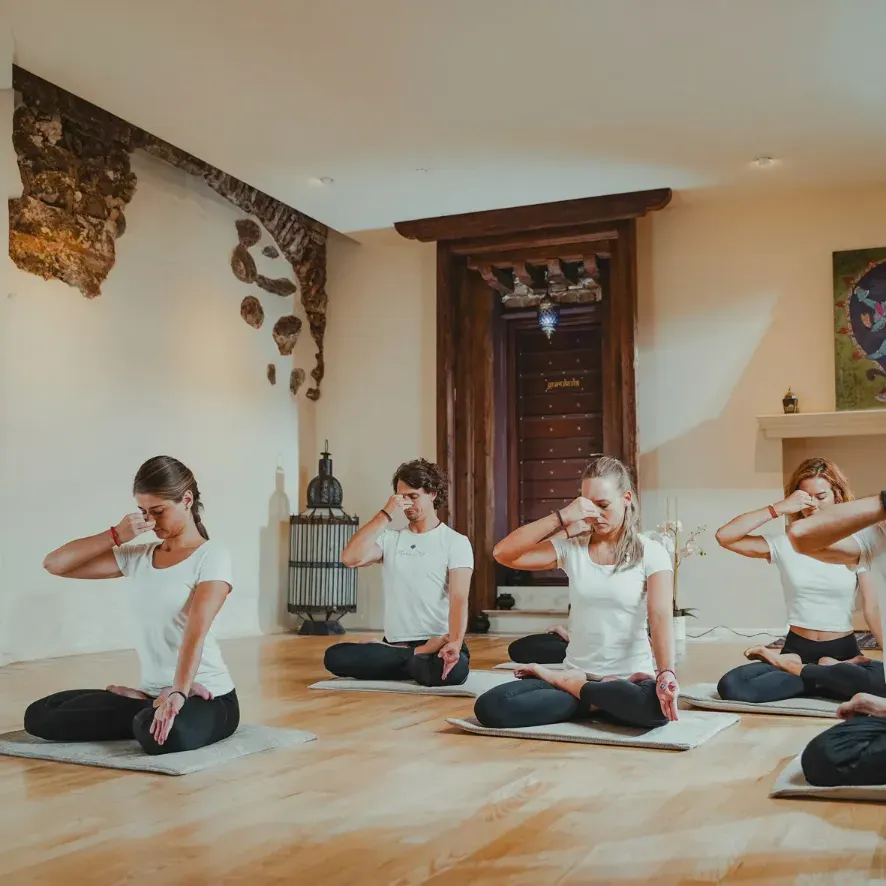
How often do we stop to think how important breathing is for us? Most of the time a person breathes automatically. At the Mai Ram Yoga School, when practising pranayama, we learn to become aware of the breath and we guide it consciously – and in this way bring great benefit to our body and mind.
Pranayama is an inseparable part of practice in the yogic tradition, meant for regulating and storing vital energy in the body. It is a practice of conscious breathing, a control of the breath that not only improves the functioning of the whole organism but also calms the mind, brings inner peace and prepares the practitioner for meditation. Regular pranayama practice harmonises the flows of vital energy, strengthens body and mind, and gives inner balance.
What is pranayama?
Pranayama (prāṇāyāma; prana – vital energy, yama – control) is the practice of correct and conscious breathing, its regulation and control. Pranayama is the mastery of vital energy, prana, and the building up of its reserves through breath-control practices. Control of the breath makes it possible to regulate the flows of vital energy that run through the human body along energy channels, the nadis (nāḍī), and this supports physical and mental balance.
The breath is closely linked to the state of the mind, which is why a yogi who practises pranayama calms the mind and reduces its restlessness, which is essential as a preparation for meditation. In the yogic tradition, pranayama is the fourth of the eight stages of yoga, serving as a link between physical practice and inner spiritual practice. It helps the yogi to focus attention, improves awareness, and prepares the mind for deeper meditation and the spiritual practice of yoga.
The benefits of pranayama for body and mind
Pranayama practice supports better functioning of the respiratory system, increases the amount of oxygen in the blood, improves the body’s resilience, helps to cleanse the body of toxins and strengthens the immune system. By practising pranayama regularly, a person can reduce stress, anxiety and tension and improve their mental state.
The breath is closely linked not only to the physical health of the body but also to a person’s mind and inner state. Pranayama practice helps to maintain mental balance and to turn attention towards the inner sphere. As we observe the breath, the senses begin to settle, and once they have settled, the mind settles too. In this way pranayama practice deepens the understanding of a person’s essence, gives an understanding of how life manifests, and contributes to spiritual growth.
How is pranayama practised?
In pranayama practice we learn to guide the breath consciously and to lengthen it. By observing the flow of air, we develop the ability to make full use of the whole volume of the lungs. In this way, through steady pranayama practice, lung capacity grows and the respiratory organs begin to supply all the cells of the body with oxygen efficiently. Thanks to the practice of regulating the breath, the senses and the mind begin to settle and inner peace appears.
Most of the time a person breathes without thinking about how important the breath is. They do not use the whole volume of the lungs, so their breathing is shallow. On top of that, the stress and tension they go through disturb the flow of the breath, and this has a negative effect on how the body functions. Pranayama practice helps to restore disturbed breathing, removes tension and improves the functioning of the nervous system and of the whole organism.
Pranayama at the ashram in Vilnius
At the ashram in Vilnius, pranayama is practised twice a week, and one lesson lasts 1 hour.
Pranayama I, practice at basic level, takes place on Mondays, and Pranayama II, practice at advanced level, on Wednesdays.
For the lessons of our school in Banská Bystrica, see the schedule.
Mastering pranayama requires an experienced teacher; otherwise pranayama practice can be dangerous. So before starting to attend breathing practice, it is necessary to complete the course “Introduction to pranayama practice”, which is held regularly at the ashram in Vilnius twice a year, in spring and in autumn.
Mai Ram Yoga pranayama techniques
Mai Ram Yoga pranayama techniques make it possible to learn and practise step by step, and they are divided into:
Pranayama I – Basic
Breathing practice at basic level for beginners. Basic pranayama is meant for beginners; it develops a conscious and correct rhythm of breathing and strengthens the respiratory system. During the practice the body is cleansed of impurities and various blocks that hinder the free flow of vital energy in the body are removed. Basic pranayama brings freshness, tones the body, reduces tension, improves concentration and prepares body and mind for deeper pranayama and other yoga practices.
Pranayama II – Advanced I
Breathing practice at advanced I level for experienced practitioners. Advanced pranayama is a breathing practice for the experienced that allows an even deeper mastery of conscious breathing, of the regulation of the lengthened and expanded breath, and of its effect on the body.
Individual practice
Mai Ram Yoga individual pranayama practice is meant to be done on one’s own at home. After the day’s work it calms the mind and prepares for calm sleep and good rest. In the morning, pranayama practice activates the body and improves the functioning of the nervous system.